TV Remote For Fire & TV Stick
- 4.6
- Rating
- 100.00K
- Installs
- Free
- Price
 Analysis by App-foxy
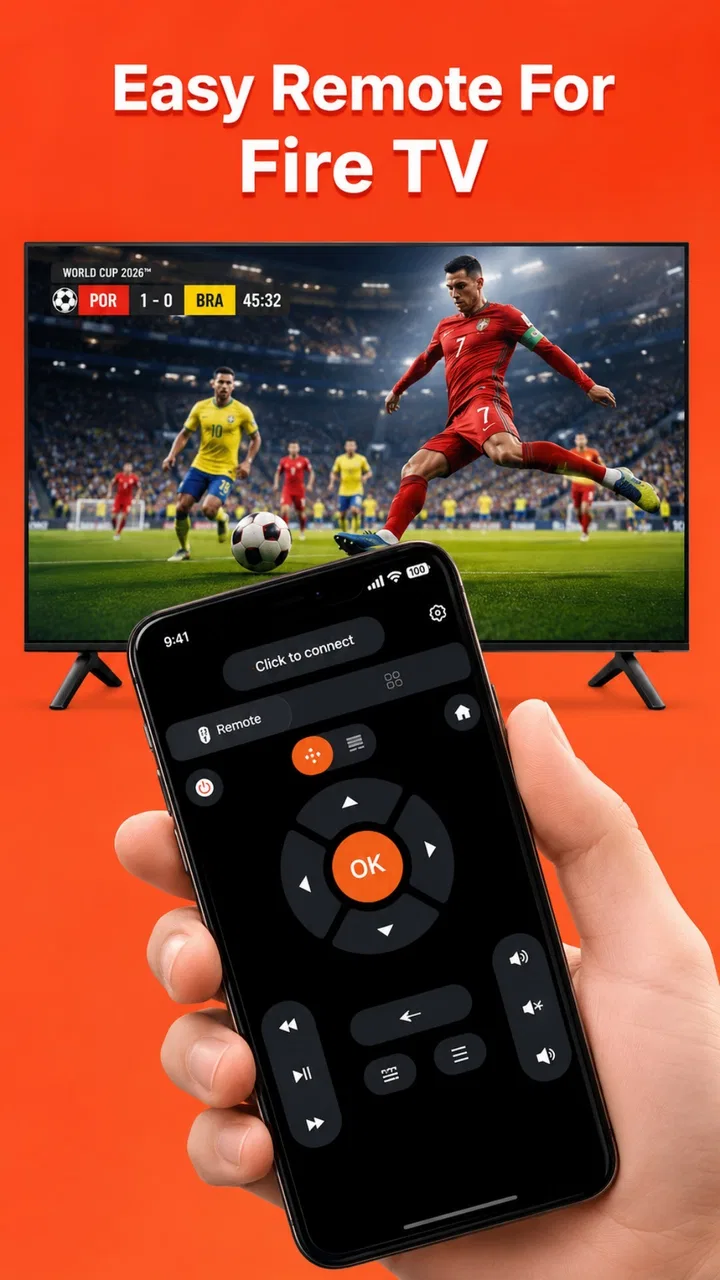
I installed TV Remote For Fire & TV Stick expecting a simple replacement for a missing remote, and that is still the clearest way to understand it. This free House & Home app from AxenGrid Labs turns a compatible phone into a touchpad-style controller for a FireStick and TV setup. Its appeal is immediate: instead of searching between sofa cushions or getting up to find the physical controller, I can reach for the phone already in my hand.
The first impression is helped by a focused purpose. The app is not trying to become a general smart-home dashboard or a media library. Its store summary centers on connecting a FireStick, controlling a TV, and using a touchpad, while the short description reduces the idea to “TV Remote.” That simplicity matters when the real problem is basic navigation rather than entertainment discovery.
After using it beyond the novelty of the first connection, I found the more important question was not whether a phone can control a television. It obviously can when the connection works. The real question is whether this app deserves a permanent place on the phone, or whether it becomes something I open only during the occasional remote-control emergency. My answer is fairly positive, but it depends heavily on how often I use a FireStick and how much I value having one less physical controller to maintain.
You May Also Like

 Blood Strike: 2.5 Anniversary
Blood Strike’s Loadouts Turn Every Drop Into a Tactical Gamble
A close look at Blood Strike’s custom loadouts: how fast access to signature weapons reshapes its battle royale rhythm, rewards preparation, and narrows the gap between fights.

 Pandora - Music & Podcasts
Pandora’s Music Is Easy to Start, but Harder to Recover
Pandora’s strength is its low-effort path from a seed to a station. Its weak spot is how much confidence it asks you to place in connection, setup, and quiet recovery.

 8 Ball Pool
 Is Built on Rivalries, Rematches, and Routine
A close look at the rivalries, rematches, shared routines, and unanswered safety questions that turn a quick pool match into a persistent mobile community.

 Samsung Music
’s Quiet Strength Is Playing What You Already Own
Its reach comes less from spectacle than from dependable access to a personal library. That simplicity is both the app’s strongest retention engine and its ceiling.

 AccuWeather: Weather Radar
AccuWeather Review: A Quick, Clear Forecast for Everyday Decisions
For everyday plans, the best forecast is the one you can understand quickly. AccuWeather makes rain timing, radar, and local conditions easy to act on, with a few trade-offs.

 Hill Climb Racing
Why Hill Climb Racing Still Turns Crashes Into One More Run
A tiny car, a bumpy hill and one more upgrade: Hill Climb Racing keeps resurfacing because its simple chaos makes every near-miss feel personal.
More From Our News Desk



From quick setup to a useful everyday habit
I find that the move from a quick setup to a lasting habit depends less on the touchpad itself than on how well the app fits the way a household shares its TV. Before relying on it, I’d decide whether it is my everyday controller or a backup, then make sure the people who might need it know where to find it. That choice also brings up a broader question: how comfortable is phone-based navigation for different users?
The first-week appeal is easy to understand
The strongest part of the experience is the first successful connection. A physical remote gives me buttons, but a phone-based controller gives me a device I already know how to locate, unlock, and operate. The touchpad approach also feels familiar if I regularly navigate menus on a phone. Swiping through a screen can be more natural than repeatedly pressing directional buttons, especially when I am browsing a long row of apps or searching through settings.
That convenience is particularly noticeable in a shared living room. A remote can disappear under a blanket, be left in another room, or run out of power at exactly the wrong moment. A phone is less likely to be permanently assigned to the television, but it is usually nearby. If I am already holding it while watching something, switching to a remote-control app is less disruptive than starting a search for the dedicated controller.
The app is also useful as a backup rather than a complete replacement. I would not throw away the original remote after installing it. A physical controller remains valuable when the phone battery is low, when another person needs to operate the TV, or when the phone is being used for something else. The sensible arrangement is to keep the app ready for routine control and emergencies, rather than treating it as the only possible input device.
One practical tip is to connect it before the moment of need. Installing a remote app while the television is already inaccessible can be frustrating, particularly if the FireStick is not visible to the phone or the network situation needs attention. I would test the connection during a calm moment, confirm that navigation responds, and then leave the app available for later. That small preparation changes it from a rescue tool into a dependable household shortcut.
How it fits a realistic evening
Imagine arriving home, putting a phone on the coffee table, and starting a FireStick session. The dedicated remote is missing, but the phone is within reach. I open the app, use the touchpad to move through the interface, and continue without turning the living room upside down. Later, if I need to pause, return to the home screen, or select another item, the same phone handles the task.
That scenario sounds ordinary, and it is. The app’s value comes from removing small interruptions rather than creating a dramatic new way to watch television. It is also useful when the physical remote is being used by someone else, when a child has misplaced it, or when I want a second controller during a shared viewing session. These are modest advantages, but they recur naturally in a home where the TV is used often.
The touchpad deserves a realistic assessment. It can make broad movement through menus feel quick, but it may be less precise than a physical directional pad for tiny selections. When several items are close together, a swipe can move farther than intended. I found it best to use deliberate, short gestures and to slow down near buttons that sit close together. Users who prefer tactile clicks may need a short adjustment period before the phone feels as controlled as the original remote.
What makes it different from the usual alternatives
The usual alternatives are the original FireStick remote, a replacement physical remote, or the official control features already available within a device ecosystem. Each has a different strength. The original remote is immediate and tactile. A replacement remote avoids using phone battery and leaves the phone free. A built-in platform option may feel more integrated for someone who already uses that ecosystem heavily.
This app’s advantage is convenience through consolidation. I do not need a second dedicated object on the table, and I can use a familiar touchscreen instead of learning a new accessory. Its weakness is the same trade-off: the phone becomes part of the control chain. If I receive a call, switch to another task, or hand the phone to someone, the television controller is no longer independent.
That makes the app a better choice for people who already rely on their phone as the center of daily tasks. It is less compelling for someone who wants a remote that can be picked up by anyone without explanation. In a household with guests, older relatives, or children who should not handle a personal phone, a physical controller remains easier to share.
Connection habits matter more than the novelty
The first week can make any remote app feel impressive because it solves an obvious annoyance immediately. The longer-term experience depends on whether connecting remains predictable. A phone remote is only useful when the phone and the television setup can see each other and the app responds without repeated troubleshooting. I would not judge it solely by the first successful session; I would judge it by whether I can open it a few weeks later and control the TV without having to rethink the process.
A useful habit is to keep the phone on the same home network environment normally used with the FireStick, rather than treating connection as something to improvise. I would also avoid closing the app in the middle of a session if I know I will need it again shortly. These are not exciting features, but they reduce the friction that makes remote apps feel unreliable.
Month-to-month value depends on repetition
For regular FireStick users, the app can earn lasting space because its benefit repeats many times. Every misplaced remote, low battery, or quick menu adjustment becomes a small reason to use it. Those moments do not need to be dramatic. A tool that saves a minute several times a week can be more useful than a feature-rich app opened only occasionally.
For occasional viewers, the calculation is different. If I use a FireStick only once every few weeks, I may forget where the app is, need to reconnect, or prefer the physical remote when it is available. In that situation, the app works best as insurance. It occupies little mental space when installed, but its value appears mainly when the normal controller is unavailable.
The free price makes that insurance easy to justify. There are in-app purchases ranging from $4.99 to $17.99 per item, so I would pay attention to any upgrade screen and decide whether the basic remote already covers my needs. For a straightforward controller, I would not assume that paying is necessary simply because an optional purchase is presented. The right test is practical: if the free experience handles navigation reliably, additional spending may not improve the everyday reason I installed it.
This is also where the app’s strong public reception provides useful context. It has a 4.7 average from around 1.8 thousand ratings and has passed 100 thousand installs, which suggests that the basic idea is resonating with a substantial group of users. I treat that as encouraging rather than conclusive. Remote apps are highly dependent on a person’s TV model, network arrangement, phone habits, and expectations about touch controls.
Who will keep using it
I can see this app becoming a regular tool for someone who watches FireStick content most evenings, frequently misplaces remotes, or wants a second controller nearby. It also suits renters, guest rooms, and shared spaces where replacing or adding physical accessories is inconvenient. A phone is often easier to carry from room to room than a dedicated controller, provided the setup is compatible and the user is comfortable with touchscreen navigation.
It is especially practical for a person who already keeps the phone beside the sofa. In that setting, the app does not ask for a new object or a new daily routine. The phone is already present; the application simply adds a control function. That is the kind of small integration that has a chance of surviving past the first week.
On the other hand, I would skip it if I strongly prefer physical buttons, share the TV with people who should not use my phone, or need a controller that works independently of phone availability. I would also choose a physical replacement if the main goal is maximum simplicity for a household where nobody wants to manage an app connection. The app is convenient, but convenience is not identical to universal suitability.
The maintenance burden is small, but real
Maintenance here is less about cleaning or configuring a complicated smart-home system and more about keeping the control path ready. The phone needs enough battery, the app needs to remain usable, and the connection needs to be available when I want to watch something. That is a lighter burden than maintaining multiple accessories, but it is still a burden that a physical remote does not share in the same way.
I would keep the app in a predictable place on the phone rather than burying it in a folder. If several people use the TV, I would show them the basic gesture and make sure they know which phone is expected to control it. A few seconds of household explanation can prevent the app from becoming a private trick that only one person understands.
Another useful workflow is to use the app for navigation while keeping the phone’s other roles separate. I would avoid starting a long viewing session with the phone as the only controller if I know I need the device for work, calls, or navigation. The app is strongest for quick adjustments and backup control; it is less ideal when the phone must remain available for several unrelated tasks at once.
The age rating of Everyone makes the app broadly approachable from a content perspective, and it runs on Android starting with version 7.0. That gives it a wide potential device range, although an older operating system does not automatically guarantee that every phone will deliver the same smooth experience. The current version is 1.4.2, so I would keep the app updated through the normal device process rather than relying on an old installation indefinitely.
Where fatigue can appear over time
The first source of fatigue is switching contexts. A physical remote can stay in my hand while the phone remains available for messages or other tasks. With this app, the controller and the personal device are the same object. Repeatedly unlocking the phone, opening the app, and returning to what I was doing can become annoying during a long viewing session.
The second is precision. Touch controls are efficient for broad movement, but they do not provide the same physical feedback as buttons. If I am trying to select a particular item quickly, an accidental swipe can move the focus away. This does not make the app bad; it means that the touchpad is a different control style, and users who dislike gesture navigation may never find it comfortable.
The third is household dependence. A remote app can feel perfect when one person controls the TV, then less convenient when several people want access. Passing a physical remote is simple. Passing a personal phone may involve privacy, battery, or hygiene concerns, and some users will reasonably prefer not to hand over their unlocked device.
There can also be a psychological fatigue that is easy to overlook: the expectation that technology should connect instantly every time. When a phone remote works, it feels effortless. When it does not, the contrast is sharper because the entire purpose is convenience. I recommend keeping the original controller accessible even after adopting the app. That is not a failure of the application; it is a sensible response to the difference between a backup tool and a fully independent remote.
Small decisions that improve the experience
My first recommendation is to test the app with the TV in its normal viewing position, not only during setup. Move through several menus, open and close screens, and try the touchpad at both slow and quick speeds. This reveals whether the control style suits you before you depend on it during a busy evening.
Second, decide whether the app is your primary remote or your emergency remote. Trying to make it both without a plan can create frustration. As a primary controller, it should stay easy to reach and the phone should usually be nearby. As an emergency option, it only needs to remain installed and tested occasionally.
Third, consider the people who share the room. If everyone has a phone and is comfortable with the app, it can reduce arguments over the single physical controller. If the TV is mainly used by someone who wants buttons and no setup, the app should remain a personal backup rather than becoming the household’s only solution.
Finally, be cautious with optional purchases. The app is free to install, while individual in-app items range from $4.99 to $17.99. I would first establish whether the core remote behavior solves the actual problem. Paying makes sense only when a specific added capability provides recurring value, not simply because the app is useful in its basic form.
My long-term verdict
TV Remote For Fire & TV Stick earns a place on my phone when I use a FireStick regularly and want a dependable fallback that can also handle everyday navigation. Its lasting value comes from repetition: the phone is already nearby, the physical remote is not always where it should be, and a touchpad can be quicker for some menu movement. The app does not need to transform television control to be worthwhile; it only needs to remove enough small annoyances to become a natural option.
I would not call it a universal replacement for a physical remote. Battery dependence, phone availability, gesture precision, and shared-household convenience all matter. Someone who wants tactile buttons and instant access without opening an app will probably be happier with the original or a replacement controller. Someone who sees the remote as an occasional problem rather than a daily tool may also install it and rarely return.
For my use, the best position is between those extremes. I would keep it installed, test the connection from time to time, and use it whenever the phone is closer than the remote or the dedicated controller is unavailable. The app’s free entry point, Everyone rating, broad Android compatibility beginning with version 7.0, and growing user adoption make that easy to justify. Its strongest recommendation is not the novelty of controlling a TV from a phone; it is the quiet convenience that remains after the novelty has disappeared.
FAQs for TV Remote For Fire & TV Stick
01What is TV Remote For Fire & TV Stick, and how does it work?
TV Remote For Fire & TV Stick is a mobile remote-control app designed to operate compatible Amazon Fire TV devices from an Android or iOS phone. After installing it, your phone and Fire TV Stick generally need to be connected to the same Wi-Fi network. The app then searches for available devices, allowing you to navigate menus, launch apps, adjust playback, and enter text from your phone.
02Is TV Remote For Fire & TV Stick compatible with every Fire TV device?
Compatibility can vary depending on the Fire TV model, operating system, phone, and app version. It is mainly intended for Amazon Fire TV and Fire TV Stick devices that support network-based remote control. Before downloading, check the app’s store listing and your device settings. Some older models, modified networks, or regional versions may not be detected correctly.
03Does the app require Wi-Fi, Bluetooth, or an internet connection?
The app normally communicates with the Fire TV device through the local Wi-Fi network rather than Bluetooth. Your smartphone and Fire TV Stick should usually be connected to the same network, although they do not necessarily need mobile internet for basic remote functions. Guest networks, VPNs, router isolation, or different Wi-Fi bands can prevent the devices from finding each other.
04Can I use the app if my original Fire TV remote is lost or not working?
Yes, this is one of the app’s most useful purposes. If the Fire TV Stick is already connected to Wi-Fi, the application may let you control it without the physical remote. However, initial setup can be difficult if the device is offline, has been reset, or is waiting for network configuration. In those situations, a physical remote or another setup method may still be necessary.
05Are there any privacy, advertising, or in-app purchase considerations?
Before installing TV Remote For Fire & TV Stick, review its current Google Play or App Store listing for permissions, advertising details, and subscription or purchase information, since these can change with updates. A remote app may request local-network access so it can discover and communicate with your Fire TV. Avoid entering sensitive information unless it is clearly required and use only the official store version.
Pros
- Works with most Fire TV and Fire TV Stick models.
- Simple touch controls make navigation quick and familiar.
- Keyboard input can speed up searches and text entry.
- Useful replacement when the physical remote is lost or damaged.
- Usually connects over Wi‑Fi without requiring Bluetooth pairing.
Cons
- Your phone and Fire TV must use the same Wi‑Fi network.
- Some features may require in-app purchases or subscriptions.
- Ads can interrupt the experience in the free version.
- Touch controls may feel less precise than a physical remote.
- Battery usage can increase during extended remote sessions.

TV Remote For Fire & TV Stick
Gallery